
However, whether a joint account actually works as a succession planning tool depends entirely on where the account is held, how it is set up, and sometimes on rules a family may not have thought about at all. In some jurisdictions, a joint account genuinely does what people expect: the survivor keeps everything automatically. In others, access may be restricted, and the deceased’s share may become part of the estate and distributed according to the applicable succession framework. Understanding this difference is essential before relying on a joint account as part of a family's wider succession plan.
This article looks at the true role joint accounts can play in succession planning across seven jurisdictions relevant to internationally mobile families: the Cayman Islands, the U.S., the UAE, Saudi Arabia, Bahrain, Kuwait, and Switzerland.
One important term to understand is "probate": it refers to the legal process of administering an estate after death, including confirming heirs and transferring assets.
 One distinction worth understanding first: money and shares vs. land and property
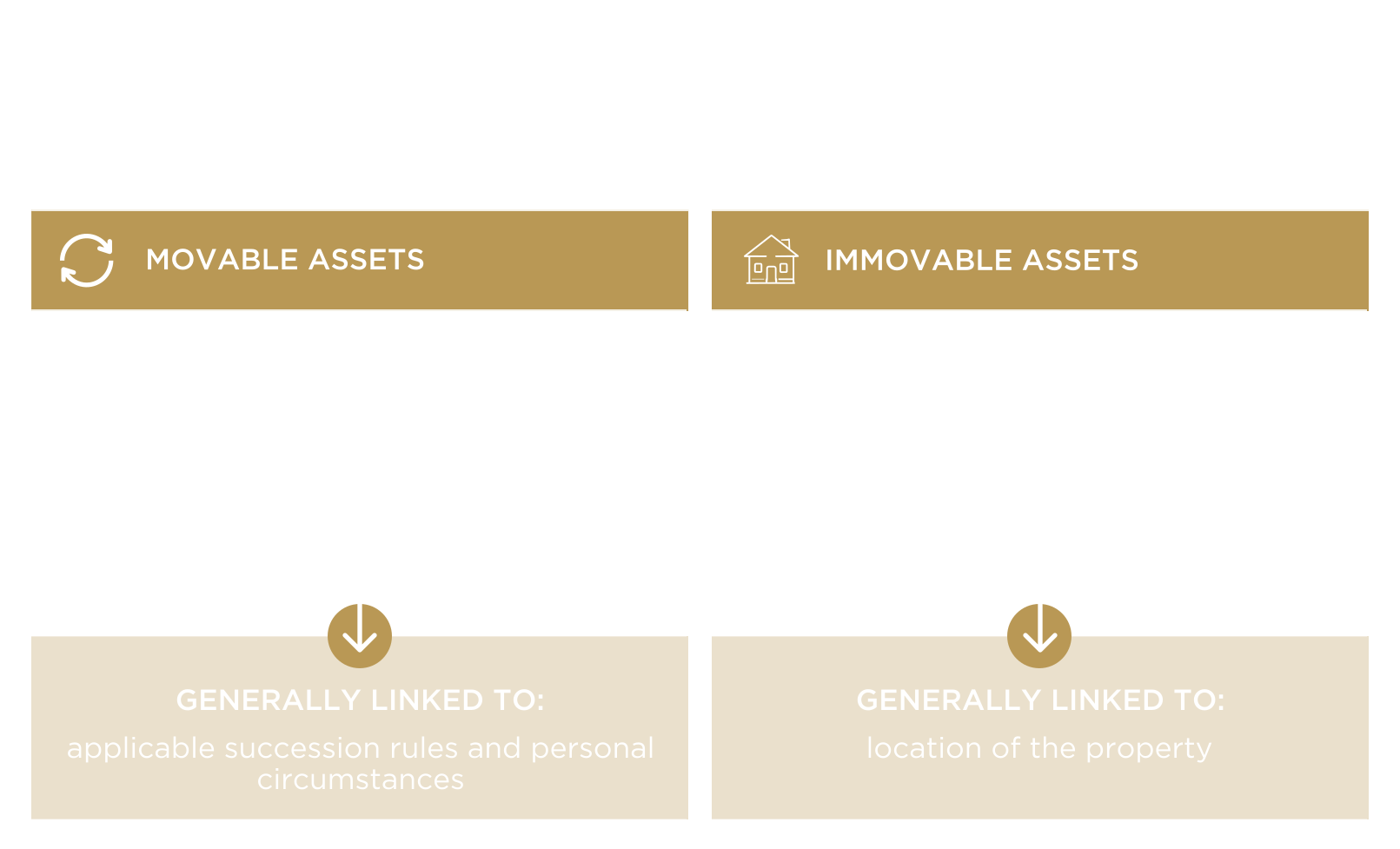
Before looking at how different jurisdictions approach joint accounts, it helps to understand one basic distinction that runs through this entire topic: the type of asset involved often determines which succession rules apply.
Bank accounts, shares, and other financial investments are generally considered movable assets, while land and buildings are immovable assets. The succession treatment of movable assets may depend on factors such as domicile, habitual residence, nationality, and applicable conflict-of-law rules, while immovable assets are generally governed by the jurisdiction where the property is located.
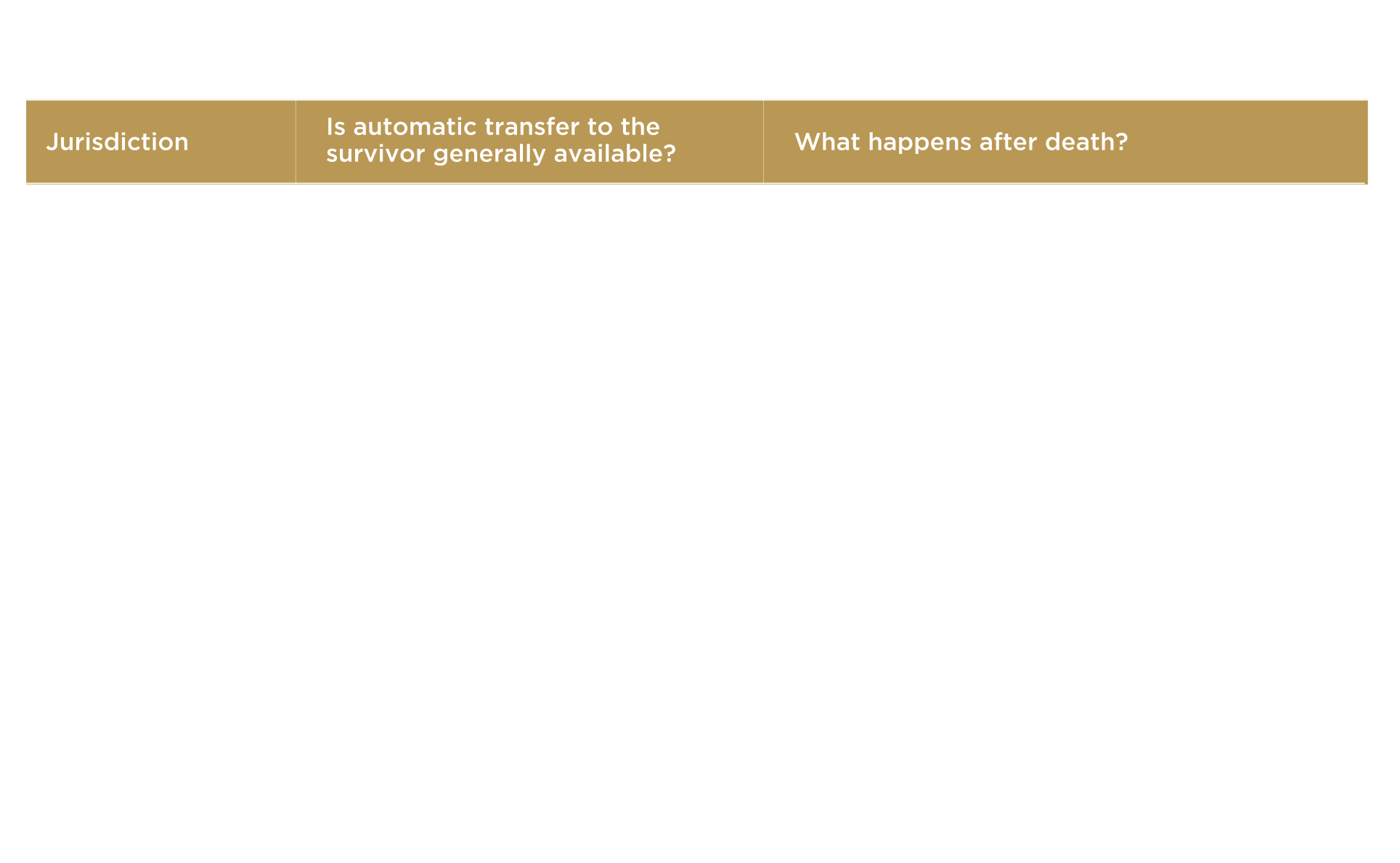
 Cayman Islands and the U.S.: when joint accounts work, and when they may not
In the Cayman Islands, joint accounts can generally function as an effective succession planning tool when they are structured with survivorship rights. When one joint owner dies, the surviving owner may become entitled to the account assets without those assets passing through the deceased’s estate, allowing continued access to the funds.
In the U.S., joint accounts with survivorship rights can also generally allow the surviving owner to assume ownership of the account assets without going through the probate process, helping ensure continued access to the funds. However, for tax purposes, the treatment of joint accounts may vary depending on factors such as the relationship between the account holders and applicable rules.
However, this outcome is not guaranteed for every family, particularly those with cross-border connections. Families who live in jurisdictions with different inheritance frameworks may face unexpected outcomes if the account structure does not align with their broader succession objectives. A joint account may provide simplicity and access, but it should be reviewed as part of a wider succession plan to ensure it achieves the intended outcome.
The GCC: fixed inheritance shares apply by default
Across the UAE, Saudi Arabia, Bahrain, and Kuwait, joint accounts generally do not provide the same automatic survivorship outcome seen in some other jurisdictions. Once a bank is notified of a death, access to the account may be restricted pending completion of the relevant inheritance procedures and confirmation of the deceased’s rightful heirs. In practice, the surviving account holder’s share remains their own, while the deceased’s share becomes part of the estate and is distributed according to the applicable inheritance framework.
For Muslim account holders in the GCC, inheritance is generally governed by Islamic fixed shares as incorporated into local succession frameworks. Under these frameworks, a surviving spouse is generally entitled to a one-quarter share where there are no inheriting descendants, or a one-eighth share where there are inheriting descendants, with the remainder distributed among other eligible heirs according to the applicable rules.
A will or joint account cannot be used to give one person a larger share than these fixed proportions allow. Generally, only one-third of an estate can be freely directed by will, while the remaining portion follows the applicable inheritance rules.
The specific procedures vary by jurisdiction. Non-Muslim expatriates may have additional planning options in some GCC countries, while offshore structures may require additional steps to recognize inheritance documentation before assets can be released.
For families relying on joint accounts for everyday expenses, maintaining separate accessible funds can help avoid a liquidity gap while inheritance procedures are completed. For larger assets, additional structures such as trusts or foundations may provide greater certainty over how wealth is transferred.
Switzerland: documentation requirements after death
Similar to other jurisdictions where automatic survivorship is not guaranteed, Swiss banks generally require inheritance documentation before releasing assets connected to a deceased account holder.
Trusts and foundations: creating greater certainty in succession planning
A trust or foundation works differently. Once assets are properly transferred into a trust or foundation, they are no longer legally owned by the individual who established the structure. Instead, they belong to the structure itself and are administered by trustees or a council according to rules established in advance.
This creates greater control over how assets are managed and distributed, allowing families to align wealth transfer with their long-term objectives. Unlike a joint account, which remains subject to the succession framework applicable to the account holder, a trust or foundation can provide greater certainty over how assets are preserved and passed on.
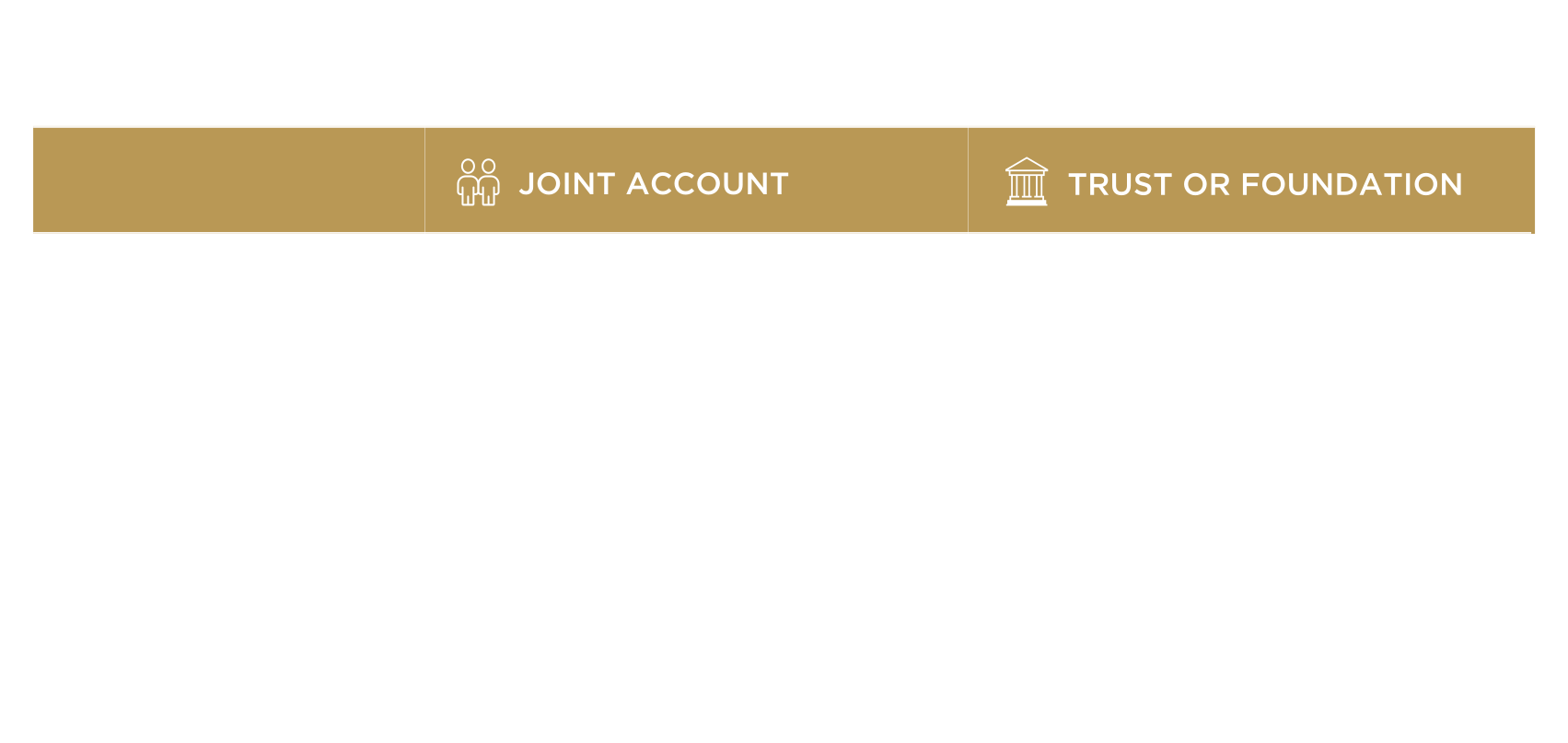 For families in the GCC, and for those seeking greater control over multigenerational wealth transfer, a properly structured trust or foundation can help provide certainty that assets are managed according to the family’s intentions. While a joint account can remain a useful tool for day-to-day shared access to funds, it should not be relied upon as a substitute for comprehensive succession planning where long-term wealth preservation is the goal.
Practical steps for families
Families should begin by reviewing their current joint accounts and succession structures to ensure they align with their intended outcomes.
Review how each account is structured and which succession rules may apply.
The treatment of joint accounts can vary depending on the account structure, jurisdiction, and applicable inheritance framework.Ensure your estate planning tools reflect your intended outcome.
A will, joint account, trust, or foundation each serves a different purpose and should be considered as part of a broader succession plan.Maintain accessible liquidity for immediate family needs.
Where assets may be restricted after a death, keeping separate accessible funds can help cover day-to-day expenses while the relevant procedures are completed.
In summary
Joint accounts are often treated as a simple, ready-made part of succession planning, but whether they actually do that job depends heavily on where you live, which jurisdiction’s rules govern your paperwork, and where the underlying money is actually held. A surviving spouse who expects to keep everything automatically may instead face restricted access to assets or find that different inheritance rules apply.
The best preparation is to understand your circumstances clearly, well before it matters. Knowing exactly how each account will behave and putting the right succession planning in place can help avoid unnecessary difficulty and delay during an already difficult time.
Families with accounts or investments across multiple jurisdictions can work with The Family Office’s relationship managers and estate planning specialists to understand how their structures may behave and design a succession plan aligned with their objectives.
If you have not recently reviewed your joint accounts, particularly where investments are held offshore, schedule a call with your dedicated financial advisor to discuss your current structures and ensure your succession plan reflects your family’s objectives.
This article is provided for general information only and does not constitute legal or financial advice. The rules governing joint accounts and inheritance are complex and vary by country, religion, and the specific way an account is set up. Please speak with a qualified adviser before making any decisions. The Family Office does not accept liability for reliance on this article.


