
A historic transfer of wealth is underway
The scale of the coming intergenerational wealth transfer is significant.
According to the UBS Global Wealth Report 2025, an estimated USD 83 trillion is expected to pass between generations over the next 20 to 25 years. This includes approximately USD 74 trillion transferred horizontally between spouses and vertically to younger generations, as well as around USD 9 trillion passed within the same generation.[1]
This will involve more than a change in ownership. It will place a new generation in positions where they may need to make decisions about family businesses, investment portfolios, property, philanthropy, and long-term wealth structures.
The financial structures supporting these transfers may be carefully designed. The people who will eventually assume responsibility for them may be less prepared.
The participation gap
The UBS Global Family Office Report 2026 highlights a clear difference between succession planning and next-generation preparation.
While 57% of surveyed family offices have a wealth succession plan for family members, only 27% have an organized process to educate or prepare the next generation for their future roles and responsibilities.[2]
This suggests that many families are further ahead in planning the transfer of wealth than in preparing the people who will receive it.
Participation also remains limited. Across the family offices surveyed, 13% report that the next generation is fully involved and 32% say they are partially involved. A further 21% say the next generation is old enough to participate but currently has no involvement.
In other words, almost half of family offices involve the next generation to some degree, yet one in five still has heirs on the sidelines despite considering them old enough to take part.
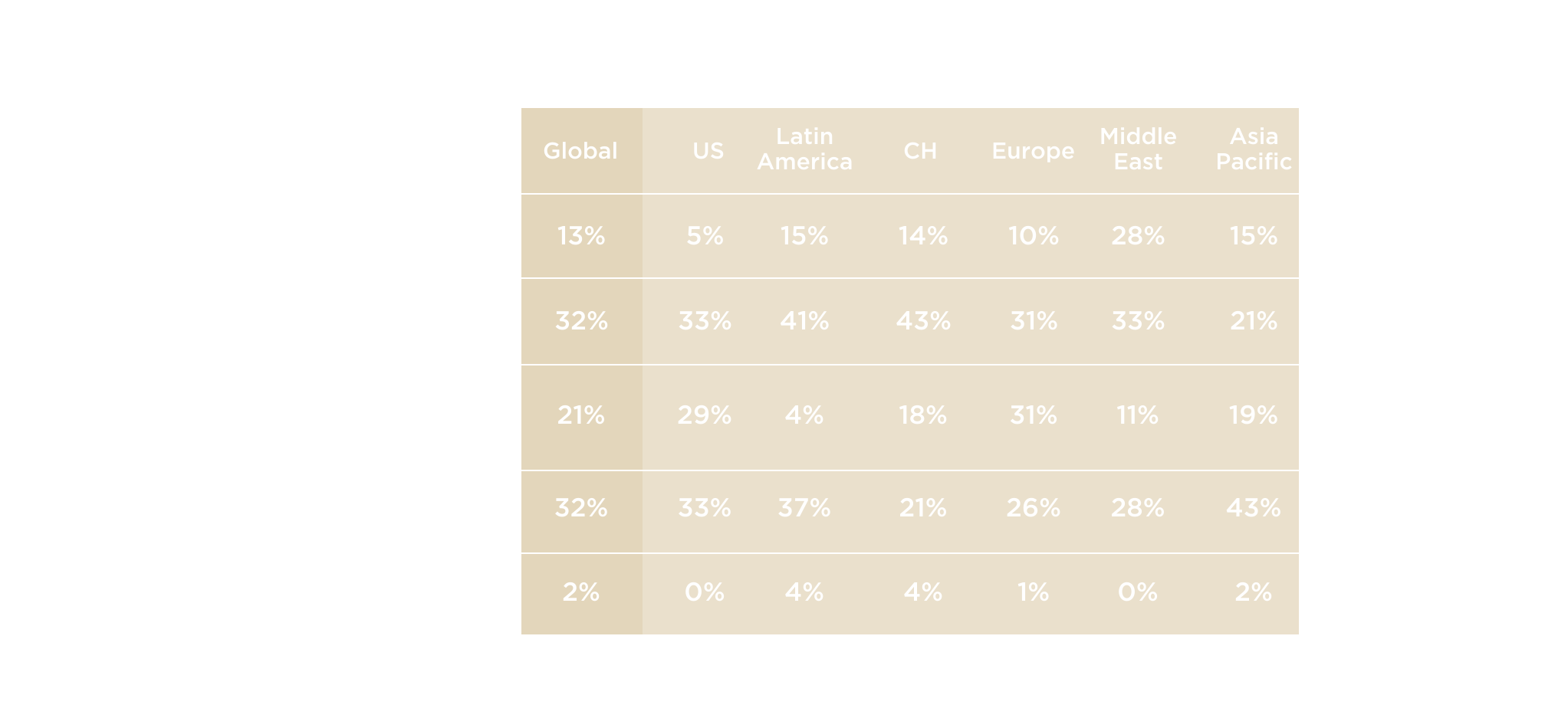
The report also identifies some of the reasons behind this gap. Among family offices where the next generation is not fully involved, insufficient financial or governance education is the most frequently cited challenge. Differences in priorities between generations and a reluctance to hand over responsibility can also limit participation.
Estate planning alone cannot prepare an heir
Estate planning can establish how wealth will be transferred. Governance structures can define how decisions should be made. Investment strategies can determine how assets are allocated and managed.
None of these, on their own, ensures that the next generation is ready to take responsibility.
An heir may receive an interest in a business without understanding its strategy. They may become a beneficiary of a trust or other structure without knowing its purpose. They may inherit a diversified portfolio without having the knowledge or confidence to assess risk, liquidity, or long-term investment decisions.
Preparation therefore needs to accompany structuring.
This does not mean every family member must become an investment specialist. It means they should understand the role they are expected to play, the principles guiding the family’s wealth, and how to work with advisors and other family members when decisions need to be made.
Financial literacy is part of this process. So are communication, governance, and practical experience.
Preparation should begin before responsibility changes hands
Families do not need to wait until a formal transfer is approaching.
The UBS report found that family offices most commonly consider ages 18 to 29 the appropriate period to begin educating and preparing the next generation. They generally see ages 30 to 39 as the right time for heirs to become more actively involved in family-office decisions.
The appropriate timeline will differ from one family to another. Readiness depends on experience, interest, family circumstances, and the complexity of the wealth involved. The underlying principle, however, is consistent: preparation is more effective when it is gradual.

Families can begin in several practical ways.
1- Building financial understanding
Education can begin with the fundamentals: how different assets work, how a portfolio is constructed, the relationship between risk and return, and why liquidity and time horizon matter.
The objective is not only to transfer information. It is to give the next generation enough context to ask informed questions and participate more confidently in future decisions.
2- Making governance visible
Governance becomes more useful when family members understand how it works.
A family constitution, council, investment committee, or documented decision-making process can clarify responsibilities and reduce uncertainty. These structures can also create a forum for discussing the family’s purpose, shared priorities, and approach to wealth.
Governance should not exist only on paper. The next generation needs opportunities to see how decisions are reached and understand where their future responsibilities may begin.
3- Introducing participation gradually
Responsibility does not need to be transferred all at once.
Younger family members might begin by attending selected investment committee meetings, reviewing part of the portfolio, contributing to philanthropic decisions, or participating in discussions about a family business.
UBS found that 52% of family offices where the next generation is not fully involved are considering financial education or training. Around two-fifths are considering involving younger family members in investment committee meetings or supporting their entrepreneurial ventures. Approximately one-third are considering participation through philanthropic initiatives.[3]
These steps can provide practical experience while the current generation remains available to offer context and guidance.
4- Transferring values as well as assets
Families often want wealth to support more than financial continuity. It may represent decades of work, entrepreneurial decisions, shared principles, or a commitment to future generations.
Those ideas cannot be communicated through legal documents alone.
Conversations about wealth can help heirs understand how it was created, what responsibilities come with it, and what the family wants it to achieve. These conversations may not always be easy, especially when expectations differ across generations. Delaying them, however, can leave important assumptions unspoken.
The goal is not to require every generation to think in exactly the same way. It is to create enough understanding for the family to make considered decisions together.
Preparing both sides of the transition
Successful wealth transfer requires more than legal structures and investment strategies. It requires preparation across generations.
Families need to consider not only where assets will go, but also who will make decisions, how those decisions will be made, and whether the next generation has had enough time to develop the necessary knowledge and experience.
The structure protects the transfer. Preparation supports what comes after it.
At The Family Office, our advisors can help families consider the investment and structuring decisions involved in carrying wealth forward. Schedule a conversation to explore how we can support your family’s long-term priorities.
[1] UBS Global Wealth Report 2025


