
A quiet period? Not exactly. The meeting marked not only the beginning of a new era under Chairman Kevin Warsh, but also a definitive end to expectations of a period of steady monetary easing.
The June meeting
In line with Chairman Warsh’s stated intention for ‘regime change’, the June statement was deliberately sparse (at 130 words, less than half the usual statement length), and pointedly lacking in ‘forward guidance’.[1]
Warsh used the press conference to reaffirm the Fed’s commitment to price stability. This, amongst other things, addressed concerns that he might be seeking to downplay the issue of rising inflation to secure a speedy rate cut.[2]
The economic projections released simultaneously show interest rates are expected by year-end: from 3.4% in March to 3.8% in December. Inflation is expected to remain sticky (3.6%) and economic growth moderate (~2.2%).[3]
The data
The most recent releases all tend to reinforce the (now largely complete) “vibe shift” from expected cuts to potential hikes.[4] Core CPI has been on an upward trend (2.5% in February to 2.9% in May[5]), while Core PCE inflation - the Fed’s traditionally preferred measure - has risen from 3% to 3.4% over the same period[6]. Goldman Sachs forecasts that a combination of energy prices, AI, and tariffs will conspire to keep inflation (and rates) above 3% for the rest of the year.[7]
Looking at the job market, while growth appears to be decelerating, unemployment figures have trended lower as of the latest reading (from 4.3% to 4.2%)[8]. The economy is still in good health, with annualized GDP growth of 2.1%.[9]
With the conflict in Iran and the knock-on effects of tariffs both stabilizing, there is a case for believing that inflation will stop rising from here on out. For now, the markets remain hawkish, betting on a September hike.[10]
The Warsh effect
Initially, there were concerns that Warsh was a political appointee, installed to deliver cuts. While he has taken pains to neuter this charge, he has wasted no time in setting out his ideas for what is essentially a period of reform at the Federal Reserve.
Going beyond the standard dichotomy of “hawk vs dove”, his stance is that the Fed’s ability lies in shaping the future trajectory of inflation rather than near-term trends (often the focus of news coverage). His agenda also looks to be far-reaching, with no fewer than five new task forces, each focusing on a different aspect of the Fed’s remit.[11]
One of these aspects is how inflation itself is measured. Warsh has floated the idea that a ‘trimmed’ mean or median measure of PCE inflation is preferable to the standard “Core” measure as it is less susceptible to distortions.[12]
The table below reveals the impact of taking different measures. As can be seen, a ‘trimmed mean’ reading shows inflation much closer to the 2% target than the standard, more encompassing measures.
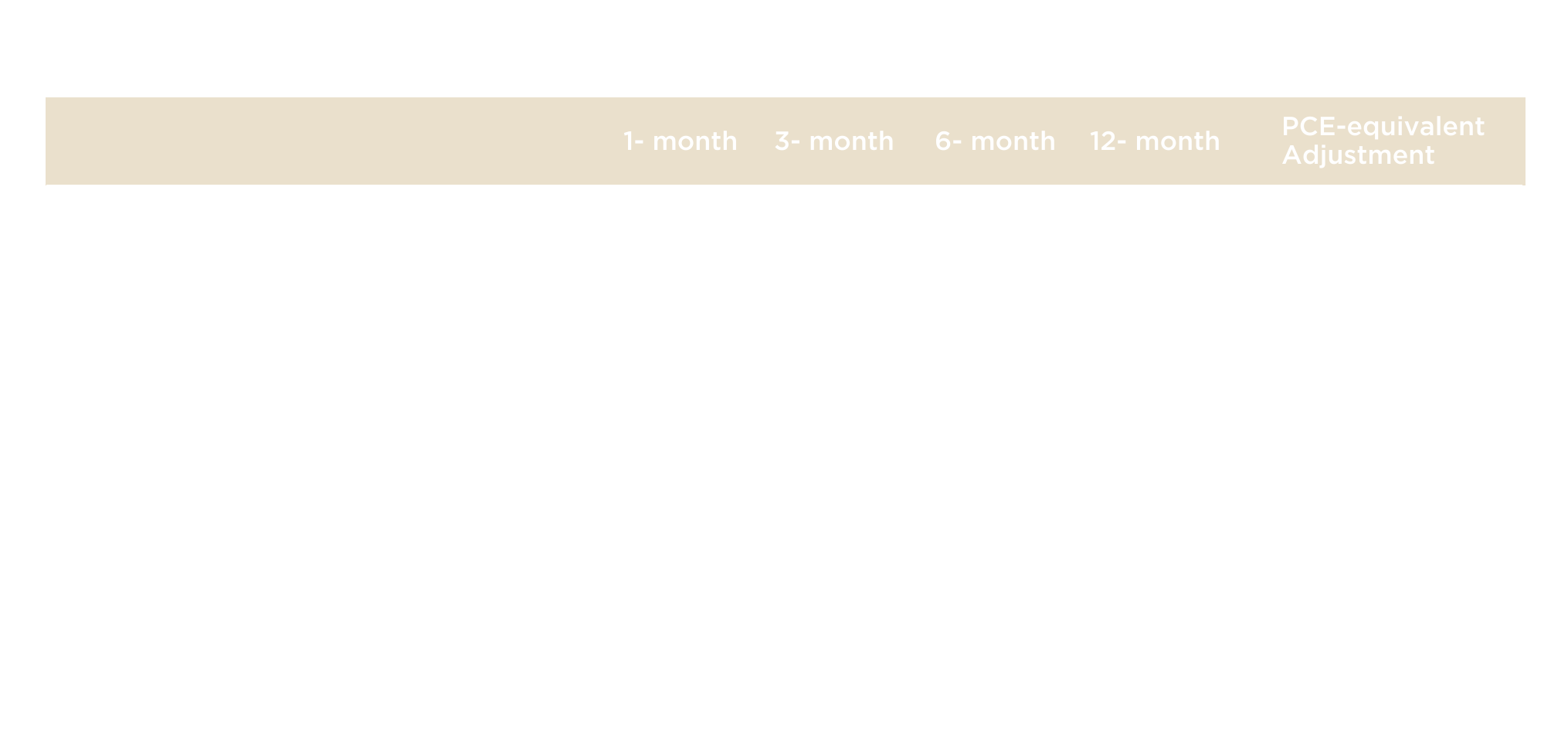
Source: Jason Furman, “PCE-equivalent Inflation for May 2026, Annual Rate,” X (formerly Twitter), June 26, 2026, available at https://x.com/jasonfurman/status/2070174516513226840/photo/1.
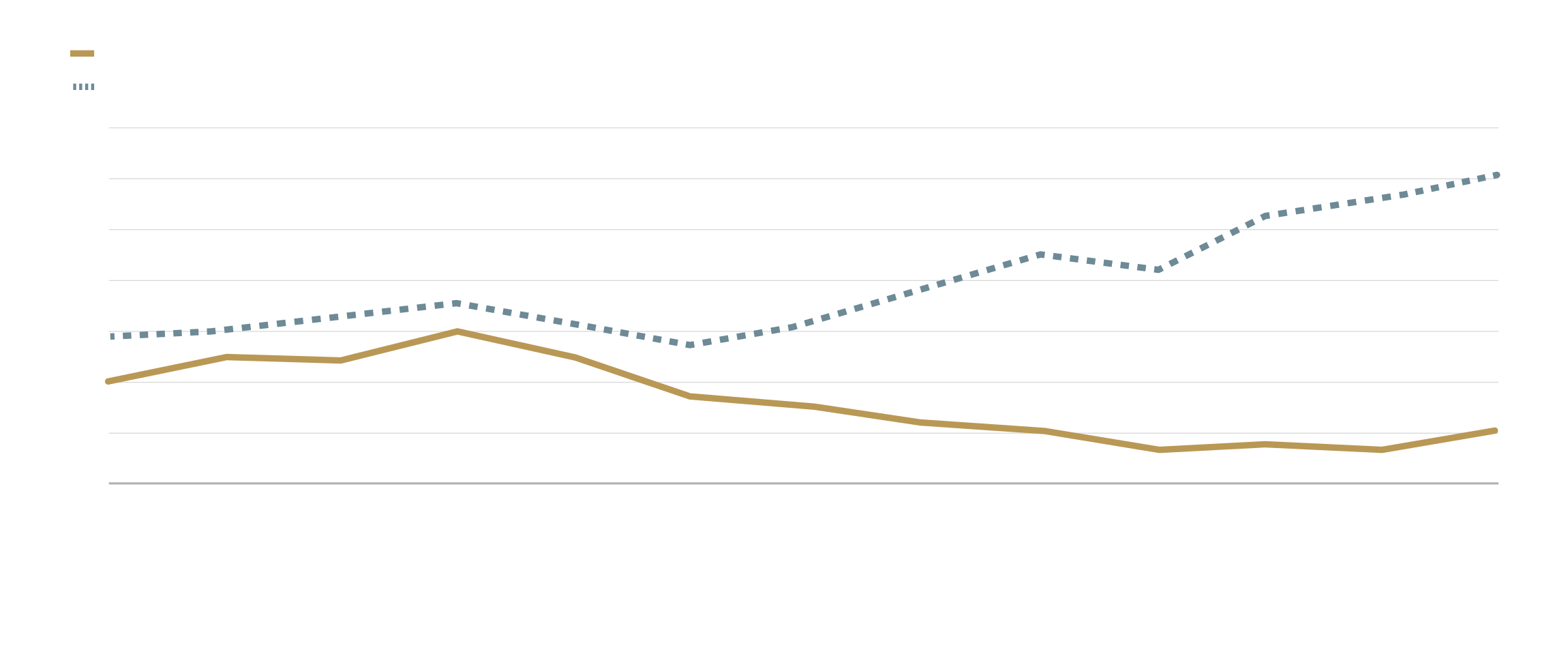
Source: Federal Reserve Bank of St. Louis
Conclusion
Other aspects of Warsh reforms include how the Fed communicates (e.g., the future of the ‘dot plot’ and other forward guidance mechanisms), how it sources data, and how it thinks about data. Not to mention the often overlooked issue of the Fed’s balance sheet - a colossal issue with no easy answers.
The outlook for what the Federal Reserve will become under Warsh is not yet clear, but it does seem likely that substantial change is on the horizon. As is often the case, the ‘gold’ is not in the interest rate decisions themselves, but in the thinking going on behind the scenes. Right or wrong, the Warsh era is likely to provide investors with substantial, and potentially higher quality, food for thought.
[5] Bureau of Labor Statistics
[6] Bureau of Economic Analysis
[8] Bureau of Labor Statistics


