
The July meeting
While it has become common for Fed members to dissent[2], July’s meeting saw the first unified triple dissent since 2016, with three presidents voting to raise rates.[3]
The minutes show that the concern about inflation went beyond the three dissenters, with “many” judging that raising rates would likely be necessary if inflation did not decline.[4] At the time, the most recent Core PCE reading (May) was running at 3.4%[5] - well above the target rate of 2%.
Fed Chairman Kevin Warsh, in the press conference following the decision, affirmed that there was no ‘soft inflation target’,[6] addressing market concerns that the Fed has tacitly resolved to tolerate higher inflation in the service of economic growth.
Hawks vs doves
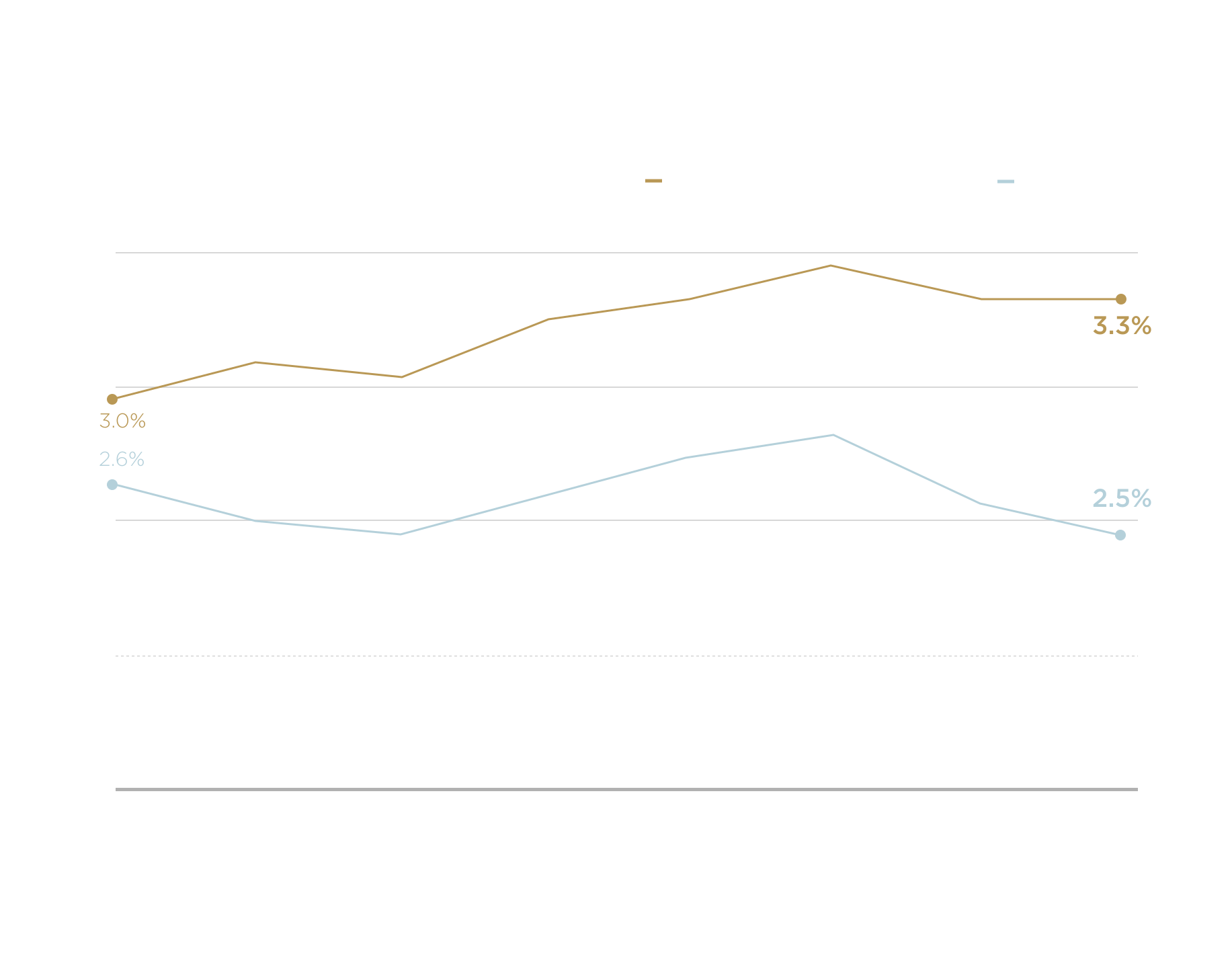
Nine days later, on August 7th, the labor market appeared to weaken, with July payrolls turning negative (-23,000),[7] and wage growth hitting a five-year low.[8] Five days later, core CPI inflation declined to 2.5%.[9] 2 days after that, July retail sales posted the worst month since May the previous year.[10]
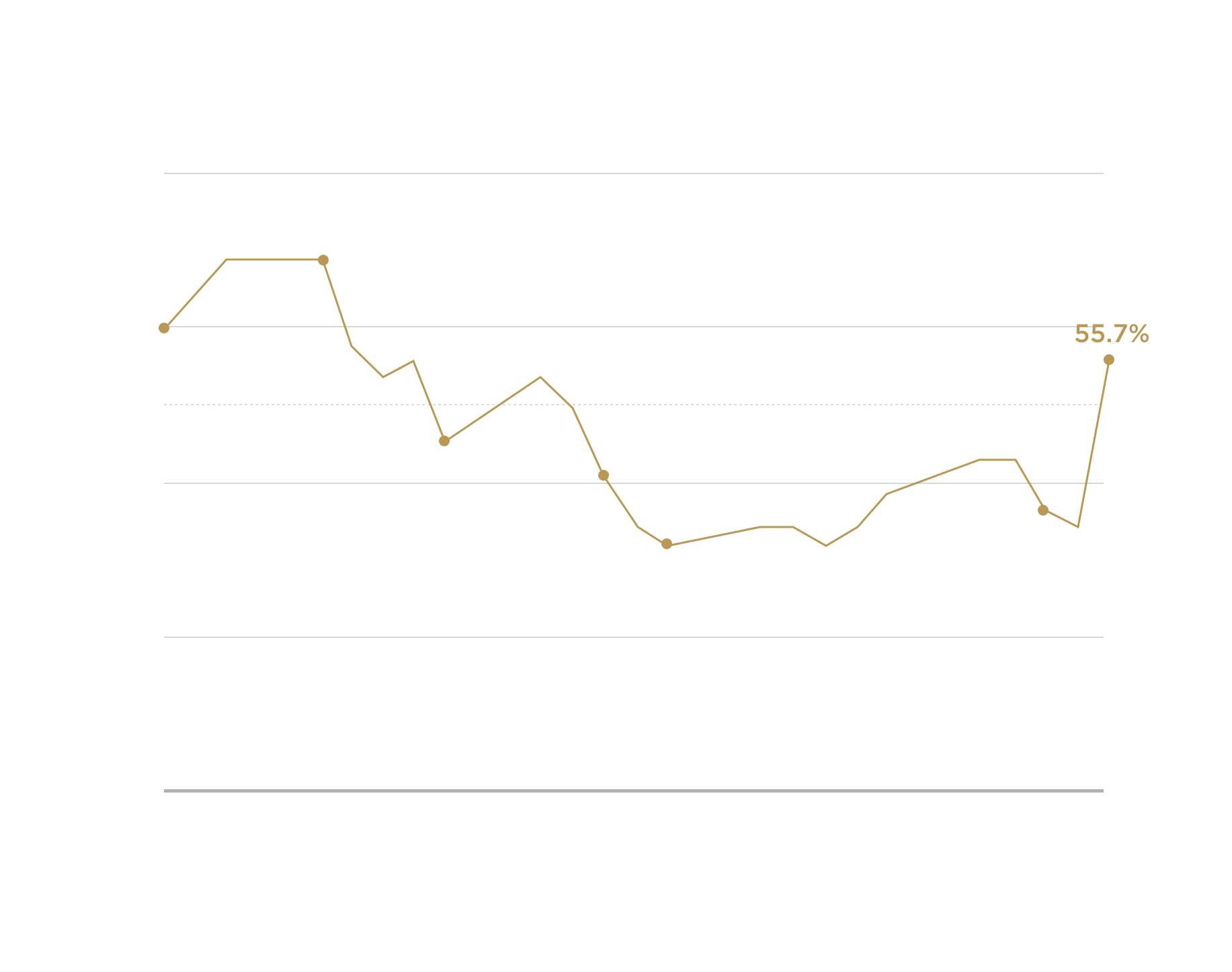
This fusillade of dovish data - both appearing to herald a slowing economy and a coming decline in inflation - led the markets to reverse their position on a likely September hike, with the probability falling to roughly 30% by mid-August.[11]
However, the July PCE reading (more significant than the CPI) released on August 26th showed core inflation holding steady on an annual basis and accelerating on a monthly basis.[12] The same morning, the second estimate of Q2 GDP showed strong growth in real final sales to private domestic purchasers (4.2%), countering the apparently gloomy outlook for GDP.
Against this changed backdrop, Kevin Warsh took the stage for his first Jackson Hole speech as Fed Chairman.
Jackson Hole
The speech covered many areas, from economics to AI.[13] With respect to the topic of employment and inflation, his speech is generally interpreted as decidedly hawkish. He described the labor market as ‘consistent with full employment’,[14] and asserted that the Fed’s ‘predominant focus right now should be on prices’.
He also took pains to rehearse his opposition to a ‘noisy’ Fed - in other words, a situation in which the market expects the Fed to continually communicate its future actions or likely response. This is consistent with his suggestion, contained in the July meeting minutes, to reduce the number of FOMC sessions from eight to six per year.
This speech, combined with the countervailing data from the previous few days, once again inverted market opinion towards a September rate hike.
Conclusion
Chairman Warsh’s speech, while not unusually long, was dense with ideas, and is well worth reading to get the proper measure of it.
The central philosophical theme (perhaps of more value than the short-term implications for September’s interest rate decision) was the need for agility when faced with the fundamental uncertainty of the markets. As he remarked, “Yesterday's news has a way of getting mistaken for what is happening right now.” This is apparent from the market sentiment chart above, which describes a rollercoaster of opinion in an economy that was more or less the same throughout.
The Fed's own conclusions are still pending. Chairman Warsh has indicated that policymakers intend to wait for the August jobs report and inflation data, both due in the days ahead of the September meeting, before forming a complete picture. The bond market has moved faster: the 2-year Treasury yield has risen over the same period, pricing in a hike ahead of that data, and broadly corroborating the swing back towards a hike shown in the chart.
This doesn’t imply a passive stance. For example, the speech identified AI as potentially introducing a new factor of production - a game-changer for economics. It may not be clear whether AI is inflationary or deflationary in the short-term, but identifying its potential correctly early on helps an investor to focus on the wood rather than get lost in the trees.
[1] U.S. Federal Reserve - Federal Reserve
[5] Bureau of Economic Analysis (later revised upward)
[7] Bureau of Labor Statistics
[8] Federal Reserve Bank of St. Louis
[9] Bureau of Labor Statistics


