
The "Good Place" Baseline
While macroeconomic forecasting remains complex, Dr. Bisat offered a constructive outlook. He assigned a greater than 50 percent probability that the global economy will end up in a "good place" in 2026. This view is supported by several converging tailwinds that favor smaller, open economies.
The global system appears to be moving toward an environment of improving liquidity and gradually lower interest rates, without a renewed surge in inflation. At the same time, an orderly weakening of the US dollar is improving competitiveness for economies linked to the greenback. Dr. Bisat views this dollar adjustment as a cyclical rebalancing after a prolonged period of strength, rather than the beginning of a structural decline.
Lower energy prices are also providing support for global consumption and investment. Meanwhile, the shifting landscape of global trade has proven resilient than many anticipated during recent tariff disruptions. Rather than collapsing, trade flows are adjusting. We are witnessing a compositional shift that is transferring manufacturing capacity and export momentum to new growth hubs across the emerging world, particularly in Mexico, India, Vietnam, and Bangladesh.
In addition, sustained investment linked to artificial intelligence represents an important structural force. For emerging economies that can absorb new technologies efficiently, this may support higher productivity and long-term growth potential.
The Policy Revolution
While emerging markets have certainly benefited from these external tailwinds, their current strength is not merely a product of good fortune. External conditions alone do not explain their resilience. Dr. Bisat emphasized a deeper structural shift that may not yet be fully reflected in broader market perception. Economic policies across much of the emerging market complex have improved meaningfully over the past decade.
Monetary policy is now more credible. Inflation management has strengthened. Fiscal discipline is more evident, debt burdens in many cases have been reduced, and institutions are broadly stronger. This policy maturation has allowed these economies to navigate post-pandemic shocks, tariff tensions, and geopolitical uncertainty more steadily than many had anticipated. Two years ago, few would have expected emerging markets to absorb policy tightening and global fragmentation as they have. Yet from both an economic and market perspective, many have demonstrated resilience beyond expectations.
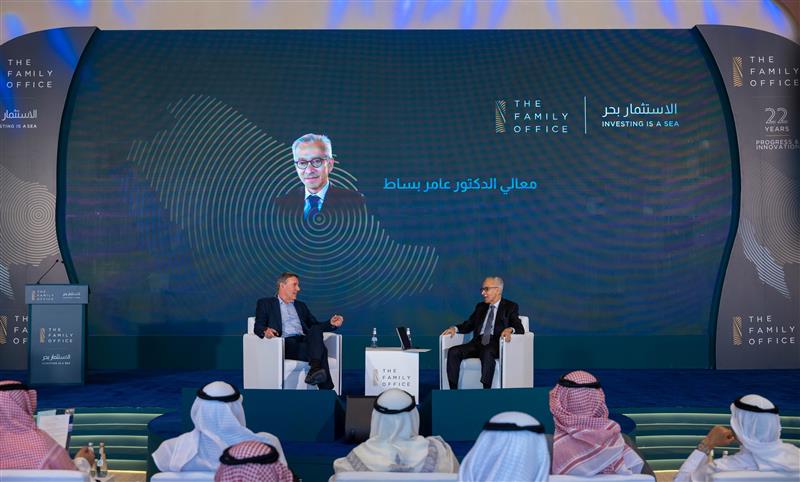
The Blueprint for Winning Economies
In this rewiring of the global order, not all emerging markets will perform equally. While broad resilience is visible across the complex, differentiation matters. Dr. Bisat identified four specific criteria that define potential winners in today's fragmented landscape.
First is scale. Larger economies like India and Indonesia possess deeper domestic markets that help maintain autonomy and absorb external shocks. Scale provides a foundation of domestic resilience that smaller economies often struggle to replicate.
Second is geopolitical neutrality. Nations that successfully navigate global polarities without becoming overly aligned with one bloc are attracting more diversified capital flows. In a world where choosing sides can create vulnerability, strategic flexibility has become a competitive advantage. Saudi Arabia, Mexico, Brazil, and India exemplify this balancing approach, navigating complex relationships while preserving their national interests.
Third is capital strength. Countries with strong balance sheets and sufficient domestic savings are less dependent on volatile external financing. Being “hostage to capital markets” as Dr. Bisat noted, limits policy flexibility. Economies that can fund their own development retain greater stability and decision-making autonomy.
Fourth is the capacity for rapid technological adoption. The ability to absorb and implement new technologies can raise potential growth over time. This advantage is not evenly distributed across regions, and while it may be more challenging in some parts of Africa, it remains highly relevant for Southern Europe, Eastern Europe, and Northern Asia.
Within this framework, the Gulf region, particularly Saudi Arabia, aligns strongly with these four vectors. Beyond the Gulf, Dr. Bisat highlighted Morocco as a clear example of successful positioning, pointing to its integration into European supply chains and its expanding automotive manufacturing hub.
He also expressed a constructive view on Egypt. Despite structural challenges and continued reliance on external financing, Egypt appears to be advancing reforms, attracting renewed investment flows, and benefiting from tourism and remittances. If it succeeds in reducing its dependence on external funding over time, its trajectory could strengthen further.
By contrast, he described Turkey as occupying a difficult middle ground. While not in crisis, it faces persistent inflation, slower reform momentum, and structural constraints that limit forward movement.
The Dollar and the Strength of the Peg
Addressing the inevitable questions surrounding the US dollar, Dr. Bisat offered a measured perspective. He views the current softening of the dollar as cyclical rather than structural. While the dollar had become significantly overvalued over the past 25 years, contributing to macroeconomic imbalances, its current weakening appears more like a rebalancing than the beginning of a structural decline.
The dollar continues to benefit from structural advantages, including relatively strong US growth, more favorable demographics compared to other developed economies, and the depth of its capital markets. Dr. Bisat suggested that the dollar may experience further cyclical weakness from current levels. However, the idea of a structural collapse, in his view, is overstated. At present, no other currency combines the macroeconomic scale, institutional depth, and geopolitical influence required to replace it.
He also addressed speculation around alternative currency arrangements, including BRICS-linked proposals. While such initiatives are conceptually interesting, he emphasized the practical challenges of building a functional currency framework among economies with different structures, fiscal positions, and institutional systems. For now, the dollar remains central to the global monetary system.
Because the dollar remains fundamentally robust, Dr. Bisat expressed support for the currency pegs used in the Gulf. These pegs have provided the region with stability, credibility, and policy discipline. They have reduced exchange rate uncertainty and reinforced macroeconomic management. As the dollar weakens, Gulf economies can benefit through improved competitiveness and real exchange rate adjustment. In his view, the existing framework has served the region well, and there is no clear reason to abandon this framework.
A Selective Approach to Value
The key takeaway is not that all emerging markets will outperform. It is that emerging markets have matured structurally. The opportunity lies in identifying countries that combine scale, geopolitical balance, capital strength, and technological adaptability. In this environment, broad allocation is less effective than targeted selection.
At The Family Office, this institutional, selective approach underpins our investment philosophy. By focusing on structural fundamentals rather than cyclical headlines, we seek exposure to resilient economies, reform momentum, and long-term value creation.
Navigating today’s global environment requires more than reacting to volatility. It requires recognizing where resilience is taking root and deploying capital accordingly.


